

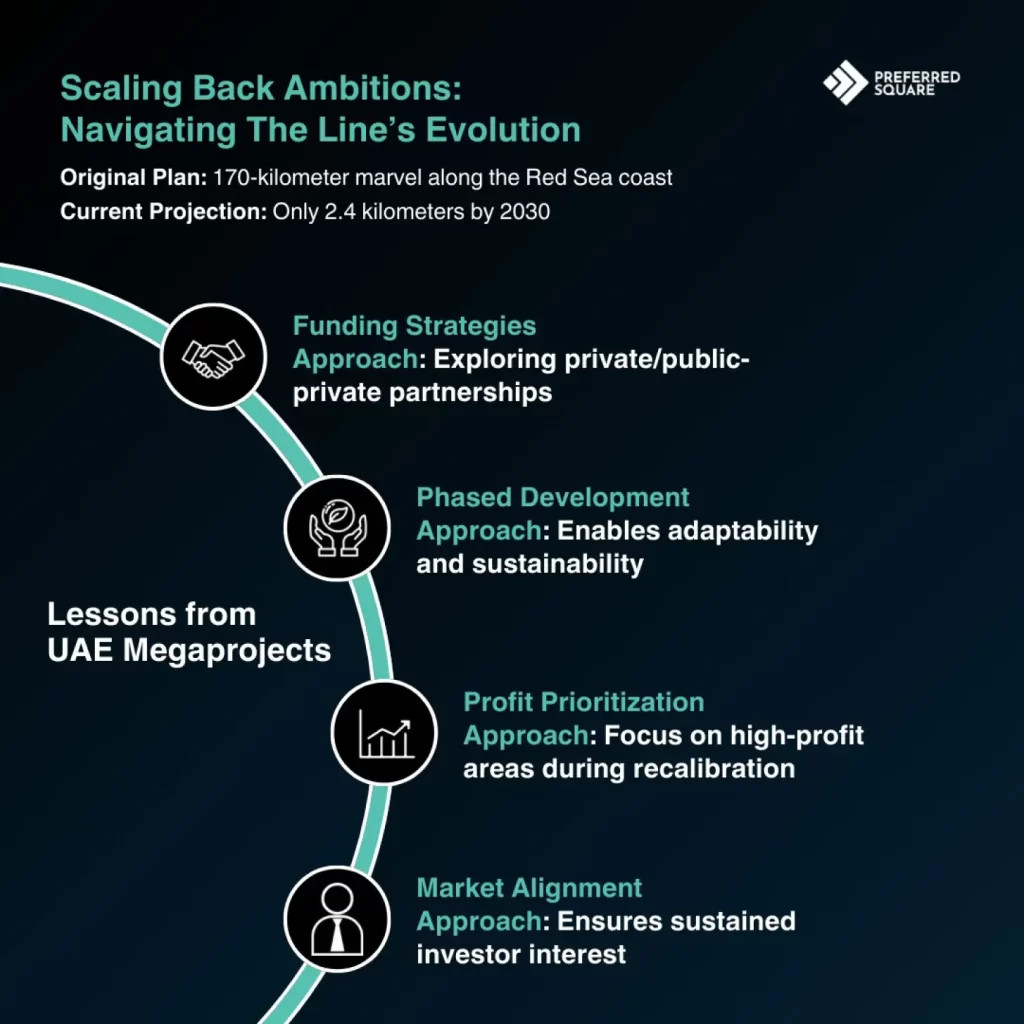
Amidst economic constraints and tepid investor sentiments, Kingdom of Saudi Arabia grapples with the recalibration of its ambitious NEOM project, particularly The Line. Initially planned as a 170-kilometer marvel along the Red Sea coast, projections now suggest only 2.4 kilometers will be realized by 2030. The downsizing of this flagship initiative underscores the complexities of realizing Vision 2030 in a challenging landscape.
Understanding Economic Realities:
-
Financial Constraints:
Public Investment Fund (PIF) cash reserves have dwindled by 75.0% from the previous year, leading to significant cash equity investments in mega-projects and other investments.
-
Investor Skepticism:
Tepid investor sentiments cast doubts on the livability and appeal of the project, raising concerns about its success.
-
FDI Challenges:
Kingdom of Saudi Arabia faces obstacles in meeting FDI targets ($100 billion annually by 2030), attributed to bureaucratic hurdles and uncertainty surrounding profitability.
The financial crunch has prompted PIF to expedite debt sales and plan equity offerings in its portfolio companies. These realities stress the need for strategic reprioritization of PIF projects, including mega projects, urging a recalibration of The Line’s scope.
Significance of The Line:
-
Job Creation:
NEOM was originally expected to create up to 380,000 new job opportunities in Kingdom of Saudi Arabia through the The Line project alone. However, these employment opportunities are now expected to be deferred for the next 10-15 years.
-
GDP Contribution:
Additionally, it was projected that NEOM would contribute up to $48.0 billion to Kingdom of Saudi Arabia’s GDP by 2030. However, with the project’s recalibration, these figures will be significantly revised down by ~90-95%.
Strategic Benefits of Scaling Back The Line Project
-
Cost Efficiency:
Downsizing The Line could enhance cost-effectiveness, freeing up resources for other NEOM or Kingdom of Saudi Arabia development ventures.
-
Phased Development:
A phased approach enables adaptability to market dynamics and technological advancements, fostering long-term project sustainability.
-
Profit Focus:
Recalibration facilitates the prioritization of high-profit sectors, attracting targeted investments and accelerating revenue generation.
Lessons from UAE megaprojects:
Despite setbacks, lessons from UAE mega-projects (like Burj Khalifa and Dubai Metro) offer insights into managing similar challenges.
Leave a Reply