
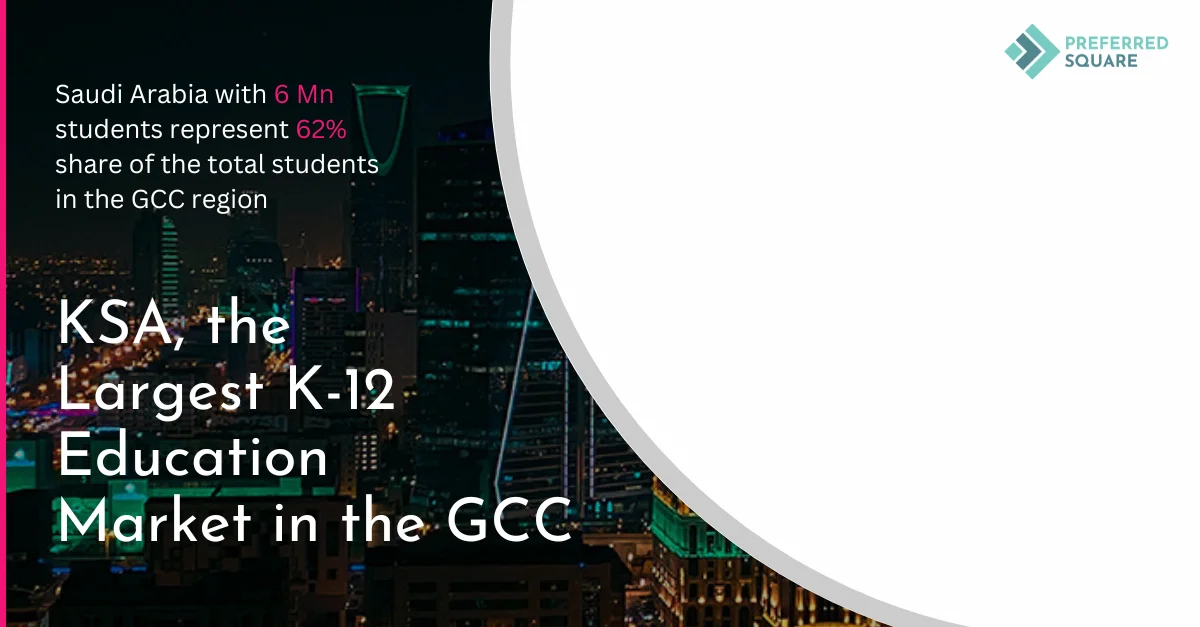
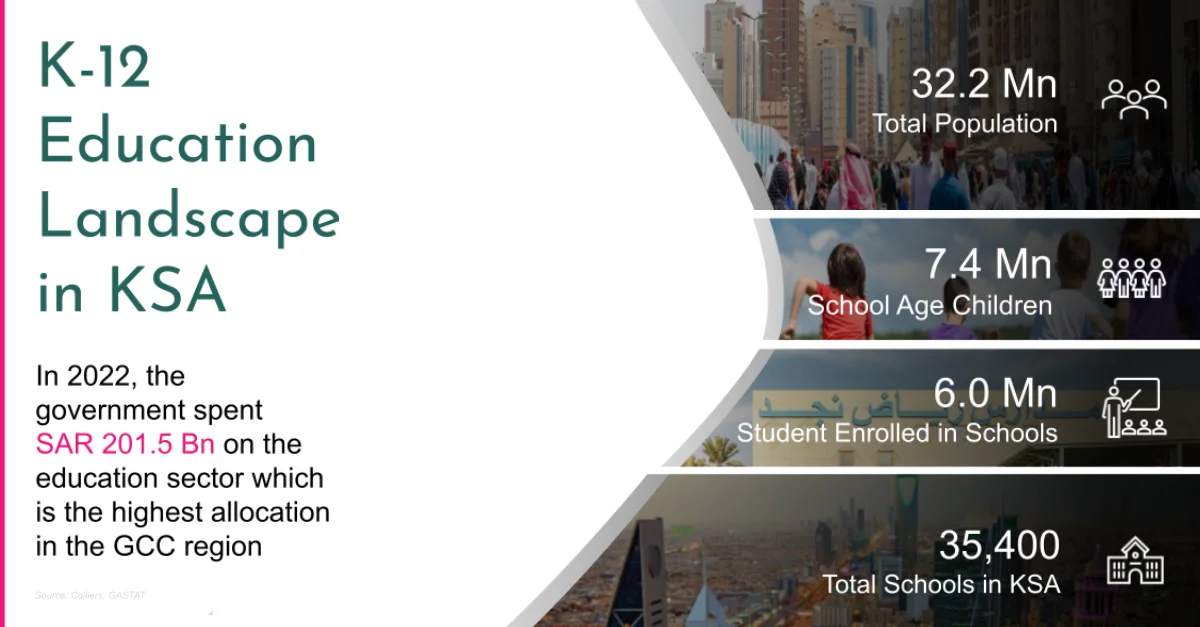
Kingdom of Saudi Arabia’s K-12 education sector is poised for significant growth, driven by Vision 2030 and the country’s robust commitment to educational reform. The Kingdom of Saudi Arabia, home to the largest school-age population in the GCC with around 7.5 million children, currently has nearly 6 million students enrolled. This vast demographic base presents a highly promising landscape for investors, developers, and educational operators.
The total addressable market (TAM) for private K-12 education in Kingdom of Saudi Arabia is projected to grow by over 50% in the next five years, fuelled by substantial government investments. In 2022, Kingdom of Saudi Arabia allocated $53.7 billion to education—the highest in the GCC—underscoring the strategic importance of this sector under Vision 2030.
This initiative aims to fortify the nation’s educational foundation as part of the Human Capability Development Program, which seeks to increase kindergarten enrolment to 40% by 2025 and ensure that Saudi students are well-prepared for future job markets.
Challenges and Strategic Imperative
Navigating Kingdom of Saudi Arabia’s regulatory and cultural landscape is one of the most significant challenges for foreign institutions. Regulatory barriers, such as licensing requirements and curriculum approvals, can be complex and time-consuming. Cultural considerations, including the integration of local values and customs into educational offerings, are also critical for success.
To navigate these challenges, understanding the educational landscape is critical.
-
Education Landscape and Population Breakdown:
With a young and growing population, the demand for quality education is on the rise. We analyzed the demographics, highlighting favourable trends such as the high birth rate and a substantial youth population poised to enter the education system.
Enrolment and Curriculum Preferences:
Knowing what parents and students prefer is the key. Our findings suggest that there is a growing interest in international curricula, with many families choosing private and international schools that offer education up to global standards. British and American curricula are especially popular, with demand expected to rise in urban centers like Riyadh, Jeddah, and Dammam. The inclusion of music and other international subjects reflects a broader cultural shift within the Kingdom’s education system.
Demand Gap and Affordability Analysis:
Despite the increasing number of educational institutions, there remains a significant demand gap, especially in regions with rapid population growth. Our affordability analysis further indicated that while there is a market for top-notch education with tuition fees of $15,000 to $20,000 annually there is also a big need for quality education that doesn’t break the bank. New entrants must balance these demands by offering accessible education that aligns with the expectations of Saudi families.
Guiding Market Entry
One of Preferred Square’s clients, an investment firm sought to enter the K-12 education industry in KSA. They wanted to understand the regulatory requirements, local cultural expectations, and the most efficient and effective way to enter this market.
Preferred Square guided the client through a phased approach, starting with low-risk strategies like franchising and partnerships, which provided market insights while minimizing risk. This groundwork enabled further growth through strategic acquisitions and expansion.
By streamlining the entry process and ensuring regulatory compliance, Preferred Square helped the client establish a foothold in this competitive market, positioning them for continued growth in the region.
Preferred Square’s Strategic GTM Approach
The Go-To-Market research conducted for our client in the Education Sector has identified a three-phase approach to successfully enter, expand, and lead in the market. The outcome is designed to balance operational risk with potential returns, ensuring a sustainable and scalable growth model.
Phase One: Market Entry and Establishment
Objective:
- To establish a presence in the educational market with minimal operational risk.
Approach:
- Engage in transactions that require minimal operational involvement.
- Focus on partnerships, franchising, or management contracts that allow for market entry without the immediate need for operational expertise.
- Leverage existing networks and established brands to build credibility and market presence.
Outcome:
- Reduced initial risk exposure.
- Opportunity to understand the market dynamics and customer needs.
- Foundation laid for further expansion with minimal risk.
Phase Two: Expansion and Market Penetration
Objective:
- To expand market share and increase brand presence by taking on more operational responsibilities. This phase was designed to assure the client’s investors about a long-term vision being planned for this investment.
Approach:
- Gradually increase operational involvement.
- Invest in developing operational know-how and building a skilled team.
- Explore opportunities for organic growth and strategic acquisitions.
Outcome:
- Enhanced operational capabilities and market understanding.
- Increased market penetration and brand recognition.
- Positioning for leadership through a combination of organic growth and strategic expansion.
Phase Three: Leadership and Consolidation
Objective:
- To achieve market leadership through comprehensive operational engagement and strategic consolidation.
Approach:
- Leverage accumulated operational expertise to drive innovation and efficiency.
- Consolidate market position through strategic partnerships, mergers, and acquisitions.
Outcome:
- Established as a market leader with a strong operational foundation.
- Ability to offer the highest returns on investment through comprehensive operational control.
- Positioned for sustained growth and dominance in the educational sector.
Guiding Market Entry
As Kingdom of Saudi Arabia continues to prioritize education as part of its Vision 2030, investing in this sector not only contributes to national development but also offers a significant growth opportunity for institutions willing to engage with the market with a long-term vision.
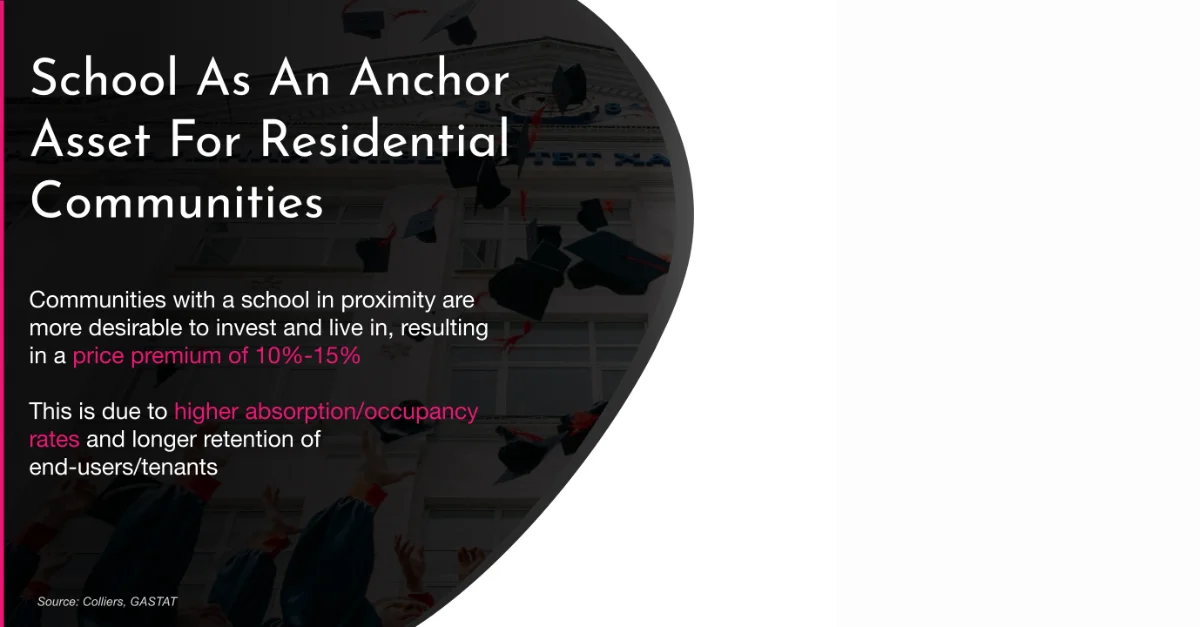
Our Go-to-Market research serves as a robust foundation for entering the K-12 Education Sector in Kingdom of Saudi Arabia. Enclosed are our insights derived from market research and analysis outlining the landscape of the K-12 educational sector of Kingdom of Saudi Arabia, offering an overview of the demographic composition, the private education enrolment, the strategic use of schools as a key feature for residential communities, and the critical factors important for success in this industry.
Leave a Reply