
Introduction
The landscape of investment strategies for family offices in Kingdom of Saudi Arabia is undergoing a significant transformation, with venture capital (VC) emerging as a compelling asset class that offers unique opportunities for value generation. As the Kingdom continues its ambitious economic diversification through Vision 2030, family offices increasingly look beyond traditional investment mechanisms to explore more dynamic and potentially high-yielding alternatives.
In FY 2023, Kingdom of Saudi Arabia surpassed the $1 billion mark for the second consecutive year as funding in the Kingdom’s venture capital market rose by 33% YoY to $1.38 billion and is consistently growing since 2019, posting a CAGR of 86% in 2023.

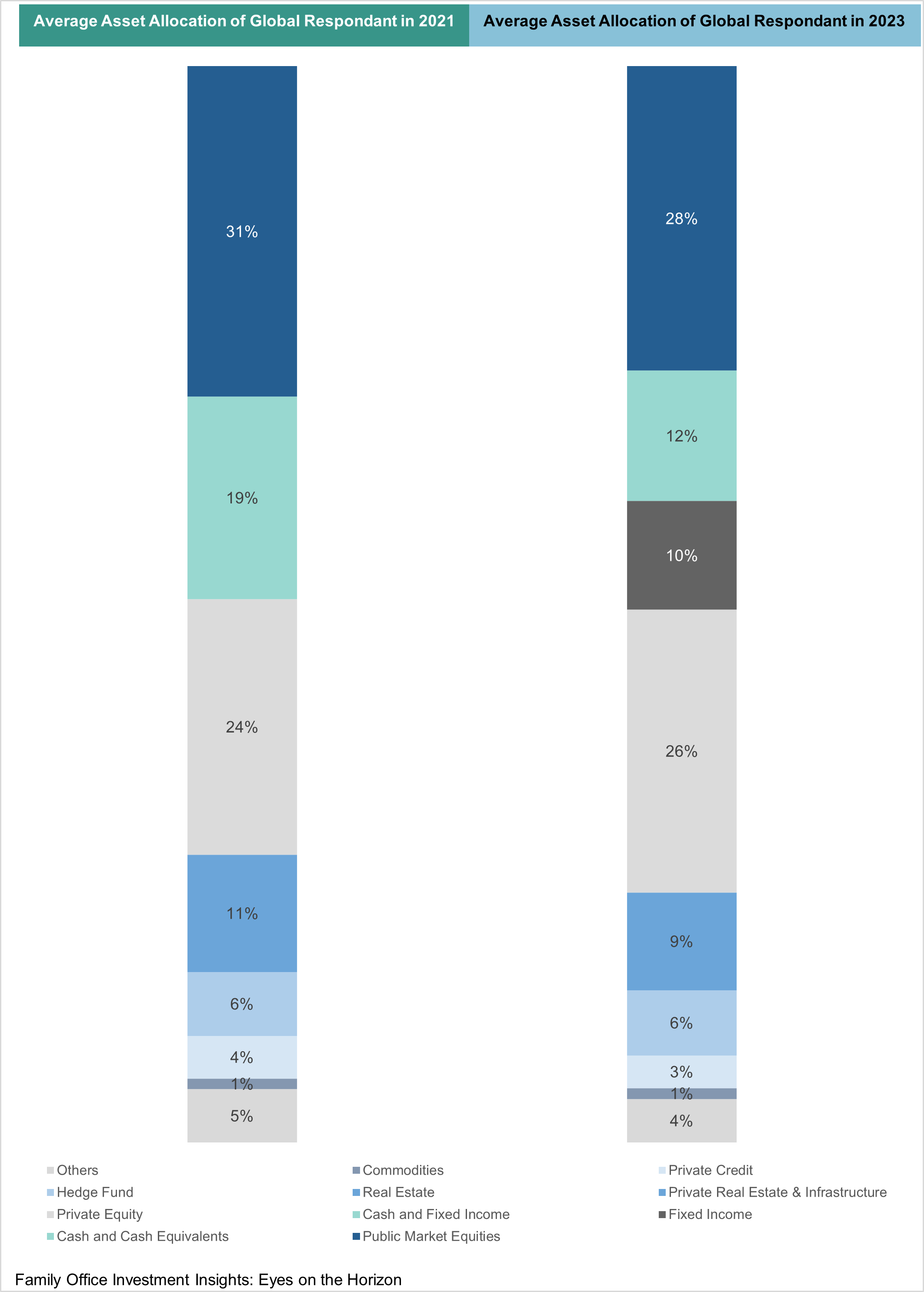
Evolution in Asset Allocation by Family Offices
Historically, family offices have concentrated their investments in traditional assets, particularly:
- Real estate, which remains a cornerstone of wealth creation
- Fixed-income instruments, especially through Shariah-compliant Sukuk markets (in Kingdom of Saudi Arabia’s case)
- Public equities
However, these offices are now transitioning toward a more sophisticated investment approach, incorporating alternative investments to enhance portfolio performance and diversification.
New Avenue for Generating Alpha – Venture Capital Investment
With broad market multiples reaching elevated levels, family offices are actively seeking alternative investment strategies to generate excess returns.
The current market conditions and significant government support make venture capital an increasingly attractive asset class. The Saudi government’s initiatives through programs like NEOM, Red Sea Development, and extensive startup ecosystem support create a conducive environment for VC investments. These strategic national projects are generating opportunities across multiple sectors, from technology and renewable energy to healthcare and entertainment.
Venture capital investment presents a unique opportunity in this context. The ability to invest in early-stage, high-potential companies provides access to innovation and growth that traditional markets may not offer. By carefully selecting sectors with strong growth potential and supporting innovative entrepreneurs, family offices can create value beyond conventional investment approaches.
With a young, tech-savvy population and government initiatives supporting entrepreneurship, the ecosystem is ripe for strategic investments. Key opportunities exist in:
- Technology startups
- Fintech innovations
- Tourism
- Healthcare technology
- Renewable energy solutions
- Digital transformation initiatives
In 2023, Kingdom of Saudi Arabia’s venture capital ecosystem experienced significant momentum, with FinTech and E-Commerce as the top-funded industries, revealing diverse opportunities. Subsequently, substantial funding in the later stages i.e. Series C and Series D has been prevalent, with notable deals in fintech firms like Tamara (raising $340 million) and Tabby (raising $250 million) shaping the investment landscape


Performance and Investment Horizon
Despite market volatility, well-structured VC investments have demonstrated the potential to generate superior returns, with expected returns ranging from 42.5% in growth stages to 60% in seed stages.
Family offices recognize that VC’s investment horizon is typically medium to long-term (5-7 years), aligning with their generational wealth management strategies. The key lies in selecting the right investment vehicles and maintaining a balanced approach that mitigates inherent risks
Understanding Risk Appetite
Risk assessment is crucial for family offices considering VC investments. The risk profile varies significantly across investment stages – from a 92.5% risk of failure in seed stage to 35% in early and growth stages. Unlike traditional asset classes, venture capital requires a nuanced approach to risk management. This involves:
- Thorough due diligence on potential investments
- Diversification across multiple sectors and stages of startup development
- Understanding the unique risk-return profile of early-stage investments
Developing a long-term perspective that can weather short-term volatilities

Investment Approach: Direct vs. Indirect Investments

There are two primary ways to invest in venture capital: directly or through fund managers. The approach taken by family offices varies based on their AUM size, risk appetite, and the competence of their investment management team. Generally, family offices with greater assets under management are more likely to invest directly as their primary approach to alternative investments. Conversely, family offices with a more linear structure tend to invest primarily through managers, with the exception of real estate.
Direct Investments
Direct venture capital (VC) investing involves investing capital directly into startups or early-stage companies, in exchange for equity or ownership stakes.
Risks of Direct Investments
Direct VC investments come with significant challenges:
- Require extensive due diligence
- Demand deep expertise
- Necessitate active management and monitoring
- Involving higher risk of individual investment failure
Suitability for family offices
Direct VC investing is suitable for family offices that understand and have potential to absorb the low success rate of startups, necessitating a large number of investments to increase the chances of success. These family offices typically have a large AUM allowing them to diversify and absorb potential losses. They also possess a dedicated investment team with expertise in venture capital to conduct thorough due diligence and manage investments effectively. Additionally, they implement robust risk management structures to identify, assess, and mitigate potential risks, ensuring the sustainability and growth of their investments.
Indirect VC Investments: A Preferred Pathway
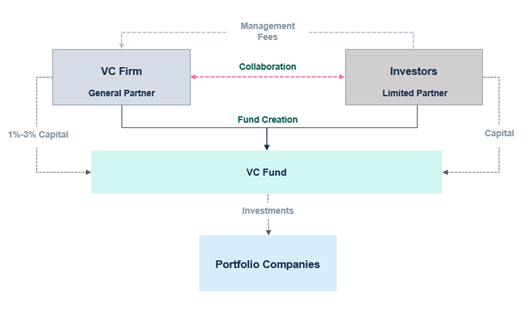
Indirect VC investing involves allocating capital into a fund, where investors place their trust in the general partner to make optimal decisions regarding the allocation of that capital across various investment opportunities. VC Funds have an expected IRR of 15% to 27%. There is a minimal probability of a fund defaulting, thereby ensuring that investor’s capital will be managed optimally by the General Partners (GPs).
Suitability for family offices
Indirect VC investing is suitable for family offices seeking diversification, professional management, and potential high returns without the need for direct involvement in investment decisions. These family offices benefit from the expertise of experienced fund managers who handle investment sourcing, due diligence, investment decisions, and portfolio management. VC funds offer broad diversification, spreading risk across multiple investments and reduce the impact of any single failure.
Conclusion
Venture capital represents a strategic asset class for family offices in Kingdom of Saudi Arabia. By carefully navigating the ecosystem, understanding risk dynamics, and leveraging professional fund management, family offices can position themselves at the forefront of innovation and economic growth.
The future of investment lies in embracing transformative technologies and supporting entrepreneurial ecosystems. For family offices in Kingdom of Saudi Arabia, venture capital is not just an investment strategy—it’s a pathway to participating in the Kingdom’s remarkable economic transformation.
Investors should approach venture capital investments with a clear understanding of their risk tolerance and alignment with their overall investment philosophy. By carefully evaluating these factors, they can make informed decisions that maximize returns while staying true to their long-term financial goals.
4px;font-family: Helvetica;color:#000000;}
.news-section .blog-content .sub-heading {font-size:28px;line-height:1.2em;font-weight:700;}
.news-section .blog-content li.sub-heading {font-size:28px;line-height:1em;font-weight:700;}
@media only screen and (max-device-width: 767px) {
.news-section .blog-content ol li::marker {font-size:22px;}
.news-section .blog-content .sub-heading {font-size:22px;text-align:left !important;}
}
Leave a Reply