
Executive Summary
This document outlines the various elements of corporate strategy. A Corporate Strategy is a dynamic framework that bridges the gap between an organization’s current state and its targeted future state while balancing aspirations with capabilities. The strategy serves as a path to success, guiding resource allocation and prioritizing actions to maximize efficiency.
It describes a four-step journey for preparing a corporate strategy starting with the Current State Assessment, followed by the Target State Assessment, then choosing the best approach from a pool of alternatives, and finally, the enablers to implement any strategy. In addition to the four-step approach, this document briefs the interplay between strategic choices and enablers, challenges, and solutions.
Corporate Strategy: Overview
At its core, a Corporate Strategy outlines the journey from the company’s current position to its target state. It is about identifying the most effective way to undertake that journey. Strategy is not just a rigid plan, but a dynamic approach that outlines how to achieve these objectives while adapting to changing circumstances.
It is a balance between aspirations and capabilities, constantly aligning the business’s long-term goals with the realities of its sector and the company’s resources. It provides clarity amidst uncertainty, turning abstract plans into actionable steps for success.
A well-designed corporate strategy acts as a guide that steers an organization toward achieving its objectives. A strategic plan helps to prioritize the allocation of a company’s resources effectively. Below are the four major steps in formulating a Corporate Strategy:
-
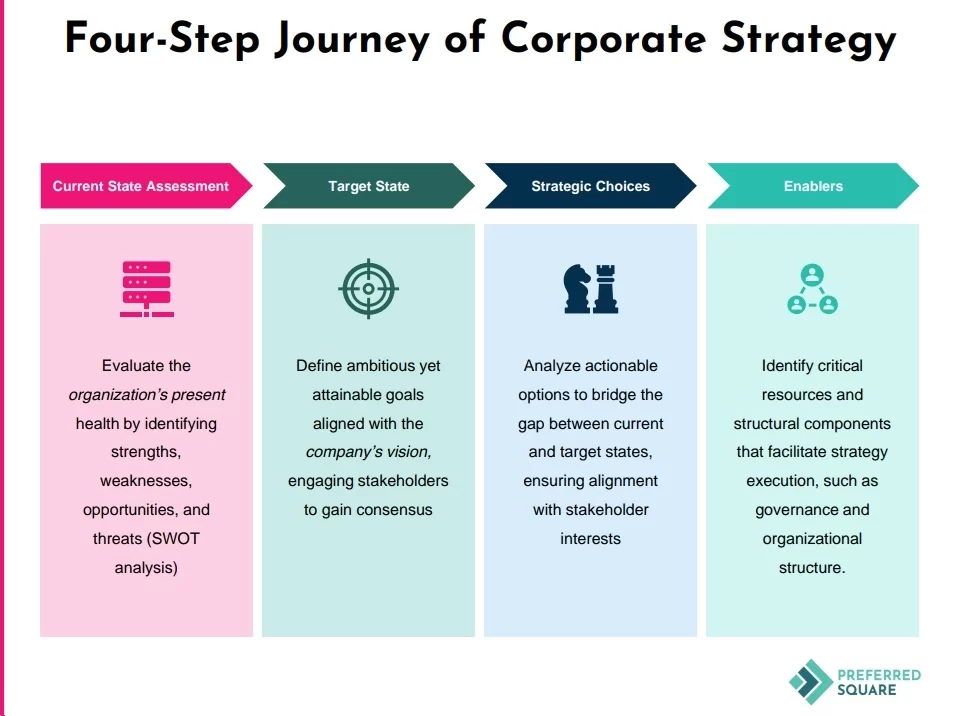
1) Current Business State Assessment
This evaluation represents the present health of the organization.
-
2) Target State
Once the current state is established, the next step is to identify the desired state or long-term vision subject to organizational and market constraints.
-
3) Strategic Choices
Analysis of actionable strategic options is carried out to choose the best course of action that will enable the organization to achieve its corporate vision.
-
4) Enablers
Enablers are critical components that facilitate the execution of corporate strategy.
These resources are essential for the successful implementation of a strategy.
The Four-Step Journey of Corporate Strategy
1. Current Business State Assessment (CBSA)
Effective corporate strategy planning starts with a comprehensive current situation assessment. By getting to know about the company’s current position including its strengths, weaknesses, opportunities, and threats, management can evaluate its market positioning.
Current Business State Assessment includes a diagnosis of the company’s financial and operational metrics by collating primary and secondary sources of information.
In our recent engagement, a client owned an asset portfolio generating subpar returns. The diagnosis indicated that their portfolio was concentrated primarily in a few sectors (asset type and geography), with most of them being dormant. These dormant assets increased the burden on the balance sheet and were susceptible to taxation.
This assessment established a baseline for the entire business and aligned all the relevant stakeholders about recognizing the current portfolio performance. In our experience, acknowledging the existence of the problem is a good starting point for solving the same.
2. Target State
The second stage focuses on setting ambitious yet attainable goals to reach the desired state, considering factors like vision, mission, values, and strategic objectives that align with the company’s vision.
It starts with engaging all the relevant stakeholders (shareholders, board members and management personnel) in a workshop to understand their aspirations towards the company. It is after these individual discussions that we arrive at a consensus for the company.
We cross check these assessments against industry standards and best practices to check for its practicality. The client’s shareholders demanded a steady dividend and a return on its portfolio.
3. Strategic Choices
Strategic Choices Strategic choices refer to the various routes available for an organization to bridge the gap between its current state and the target state. These choices are crucial in shaping the future of the organization, influencing its competitive positioning, market presence, and overall success. It is essential for any organization to meticulously evaluate the most appropriate option to select the one that best aligns with the interests of stakeholders and the vision, goals, and objectives of the company.
Usually, these choices are evaluated both quantitatively and qualitatively to arrive at the conclusion. These analysis and evaluation are also presented to the relevant stakeholders (usually the Board of Directors) to seek their feedback/approval.
For instance, if a company has a target state that requires achieving a specific revenue milestone, it may face a strategic choice between expanding into a new geographic market or deepening its presence in existing markets. The decision between entering a new market or operating in an existing one depends on current market conditions, the state or country of operation, and the company’s resources and capabilities. This choice is crucial for the long-term value creation of the company. By carefully evaluating these factors, the company can make informed decisions that support sustainable growth and long-term success.
4. Enablers
Enablers are the critical factors and resources that support the successful implementation of an organization’s strategic choices. These elements facilitate the execution of initiatives, ensuring that the organization can effectively pursue its goals and navigate the complexities of the business environment. The two most common examples of enablers are Organizational Structure and Corporate Governance:
A) Corporate Governance
An organization’s governance structure includes the policies, procedures, and guidelines that determine how it operates. It aligns the interests of concerned parties like shareholders, the board of directors, and the management ensuring ethical, transparent, and responsible business practices. The Delegation of Authority (DOA) Matrix is the key to effective governance, clearly defining roles and responsibilities to avoid overlaps and confusion. Corporate policies guide behavior and decision-making, ensuring legal compliance, risk management, and operational efficiency. These policies express the company’s values and expectations, providing a clear roadmap for employees. When aligned with corporate strategy, they convert long-term objectives into actionable steps, fostering a positive image and trust among stakeholders. Regular updates keep these policies relevant and help drive the organization towards its vision and long-term success.
B) Organizational Structure
Organizational structure defines how a company is managed and organized, breaking down work into manageable tasks and assigning them to individuals or teams. A well-designed organizational structure enhances a company’s effectiveness and efficiency by clearly defining roles and responsibilities, which reduces confusion and overlap. This clarity improves productivity, inculcates better communication, and speeds up decision-making. Additionally, it promotes accountability and cooperation among team members. By streamlining processes and eliminating redundancies, a good structure reduces resource wastage, saving time and costs. Overall, a thoughtfully designed organizational structure is crucial for achieving strategic objectives, driving growth, and maintaining a competitive edge.
Designing an effective organizational structure is a complex challenge with no universal solution. While various approaches exist, the real difficulty lies in implementing a structure that aligns with the company’s goals and strategy. This challenge is compounded by the fact that most stakeholders tend to view organizational structures through the lens of their individual roles and responsibilities, rather than considering the broader organizational context.
This narrow focus often leads to resistance to change and difficulty in achieving company-wide alignment, as employees prioritize understanding their personal position over comprehending how the structure supports overall business objectives and promotes cross-functional collaboration.
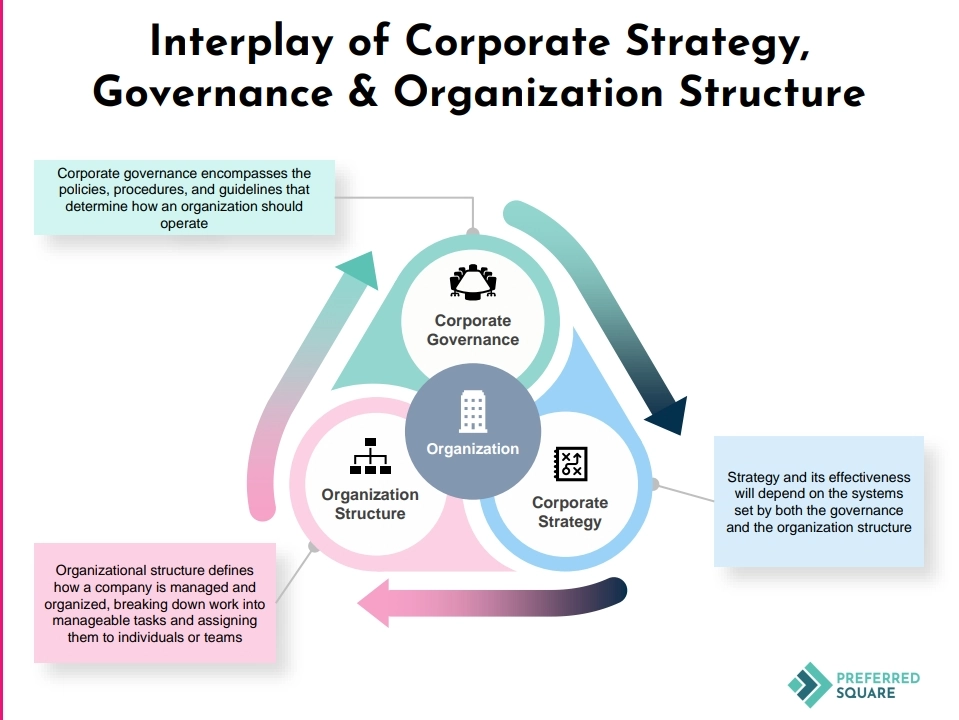
The Interplay of Enablers and Strategy
These two aspects are intricately connected and mutually influenced. Governance determines the framework of the company by setting the standards of the corporate culture and corporate personality of the firm. The structure of enablers influences the execution of the strategy because it defines how resources are deployed and how tasks are accomplished. On the other hand, the strategy affects both the governance and the structure by giving the direction in which the enablers must go ahead.
In a certain instance, we suggested a client undertake a demerger process, separating the parent company into distinct entities: a Holding Company and its subsidiaries, including Operating and Managing companies. This organizational restructuring not only streamlined the corporate structure but also mitigated the risk by limiting the Holding Company’s liability to its contributed capital. We wanted to ensure that any potential bankruptcy of the subsidiaries would not impact the Holding Company’s assets. This prudent approach enhanced financial stability and now safeguards the overall business interests.
Additionally, we advised them to diversify into new asset classes to reap the diversification benefits. To reduce their financial risk, we recommended an approach that involved collectively raising funds through debt for the assets that could create synergies together while strategically diluting their equity stake in the assets. This dual strategy allows for enhanced liquidity and reduced exposure, positioning the client for greater financial stability and growth. This was done after a detailed analysis to ensure that our debt costs don’t compress our margins.
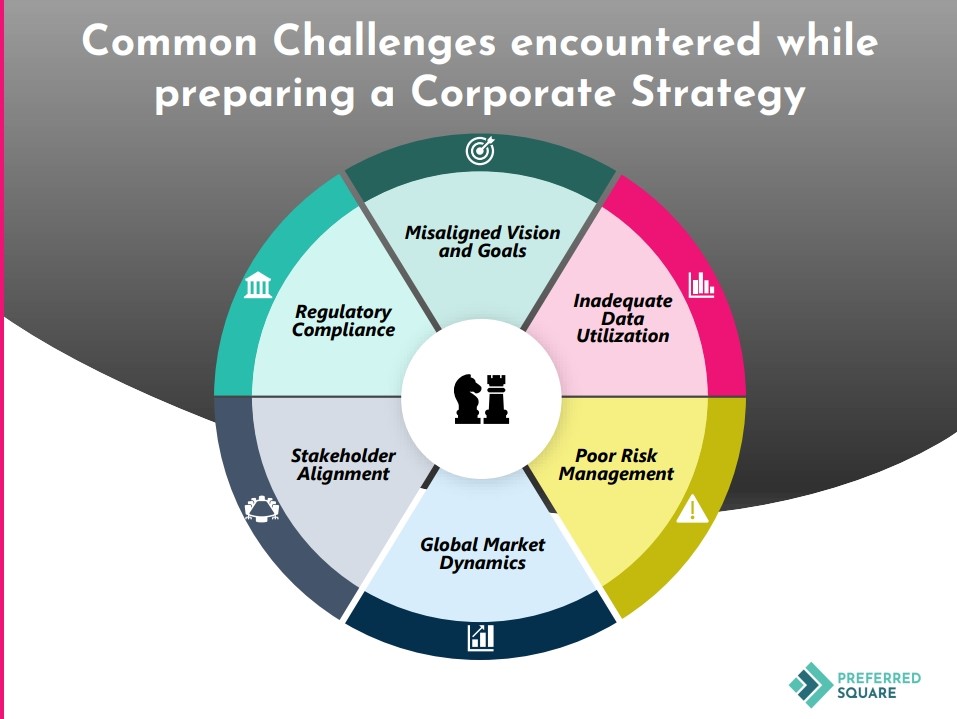
Challenges in Aligning Governance, Structure, and Strategy and Way Forward
-
Misaligned Vision and Goals
To ensure alignment, conduct comprehensive workshops that involve all key stakeholders. These workshops should focus on clearly communicating the company’s vision and strategic goals. Regularly revisit and refine these goals to ensure they remain relevant and aligned with the overall vision.
-
Inadequate Data Utilization
Implement robust tracking systems and conduct regular reviews to monitor strategic initiatives. Utilize key performance indicators (KPIs) and leading indicators to make data-driven decisions. Investing in advanced analytics and data management systems will help leverage data insights, ensuring that decisions are informed by accurate and comprehensive data.
-
Poor Risk Management
Establish and implement risk assessment frameworks to identify potential risks early. Develop contingency plans to mitigate these risks. Regularly review and update these frameworks and plans to adapt to new challenges and ensure they remain effective.
-
Global Market Dynamics
Adapt strategies to local market conditions while maintaining global coherence. Conduct thorough market research and scenario planning to anticipate changes in the worldwide market. This approach helps in tailoring strategies that are both globally aligned and locally relevant, ensuring better market penetration and competitiveness.
-
Stakeholder Alignment
Engage stakeholders early and often to ensure their buy-in and alignment with the company’s goals. Regular communication and involvement in decision-making processes helps build trust and ensure all stakeholders are aligned.
-
Regulatory Compliance
Stay updated with the latest regulations and integrate compliance into strategic planning. This proactive approach helps in avoiding legal issues and ensures that the company operates within the legal framework, thereby maintaining its reputation and avoiding penalties.
-
Execution Gaps
Develop clear and actionable plans to bridge execution gaps. Regularly monitor progress and make necessary adjustments to stay on track. This involves setting realistic timelines, assigning responsibilities, and ensuring that all team members are aligned with the execution plan.
Conclusion
In today’s dynamic business environment, effective corporate strategy is essential for organizations aiming to navigate complexities and achieve sustained growth. The outlined four-step journey—from assessing the current state to defining the target state, exploring strategic choices, and identifying enablers—provides a structured approach that enhances clarity and focus. It is crucial for companies to align their governance, organizational structure, and strategic objectives, ensuring that each element supports the others. An effective corporate strategy is the alignment between the stakeholder’s aspirations and organizational capabilities while ensuring its sync with the market dynamics.
Challenges such as misaligned visions, inadequate data utilization, and evolving market dynamics can hinder success. However, proactive measures—like fostering stakeholder engagement, implementing robust data management systems, and adapting strategies to local contexts—can mitigate these risks. By prioritizing collaboration and clear communication, organizations can create a cohesive framework that aligns aspirations with capabilities.
Ultimately, a well-executed corporate strategy not only positions companies for immediate success but also lays the groundwork for long-term resilience and adaptability. As consultants, our role is to guide clients through this journey, empowering them to transform vision into actionable results and achieve their strategic goals effectively.
Leave a Reply